
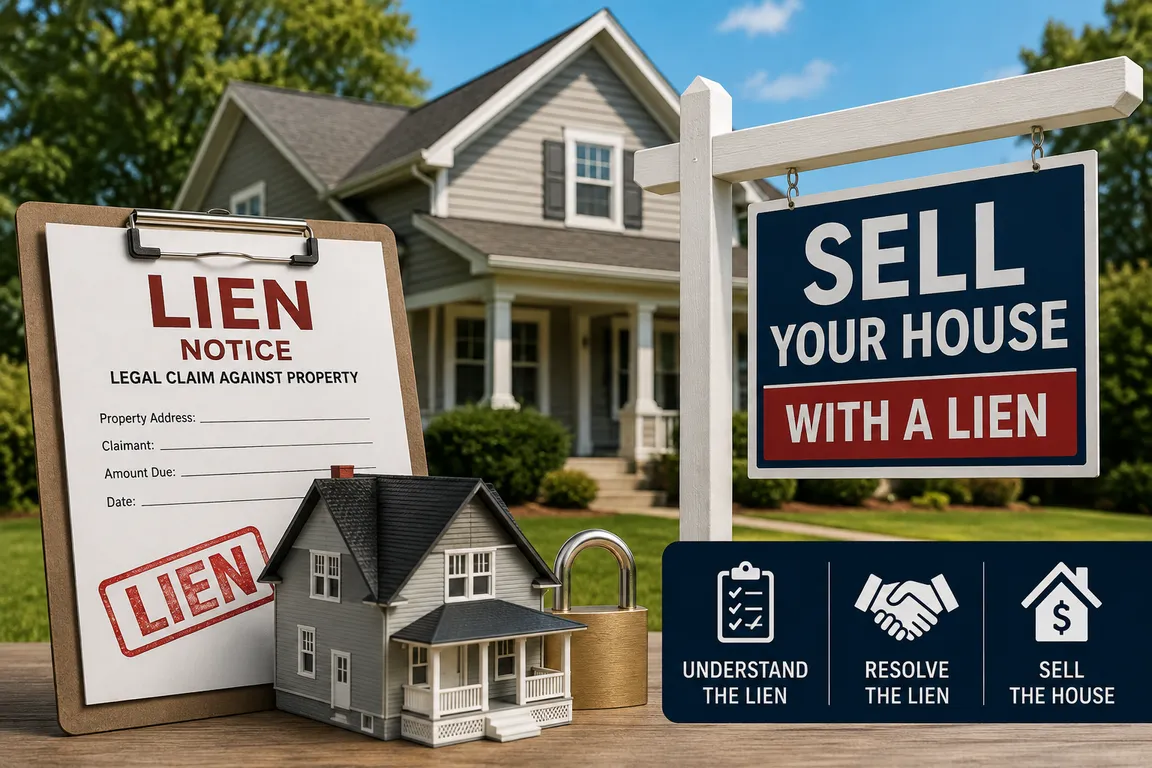
Finding out that there is a lien on your house can make selling your property feel complicated. You may wonder, can you sell a house with a lien on it? The short answer is yes, in many cases, but the lien usually needs to be addressed before or during the closing process.
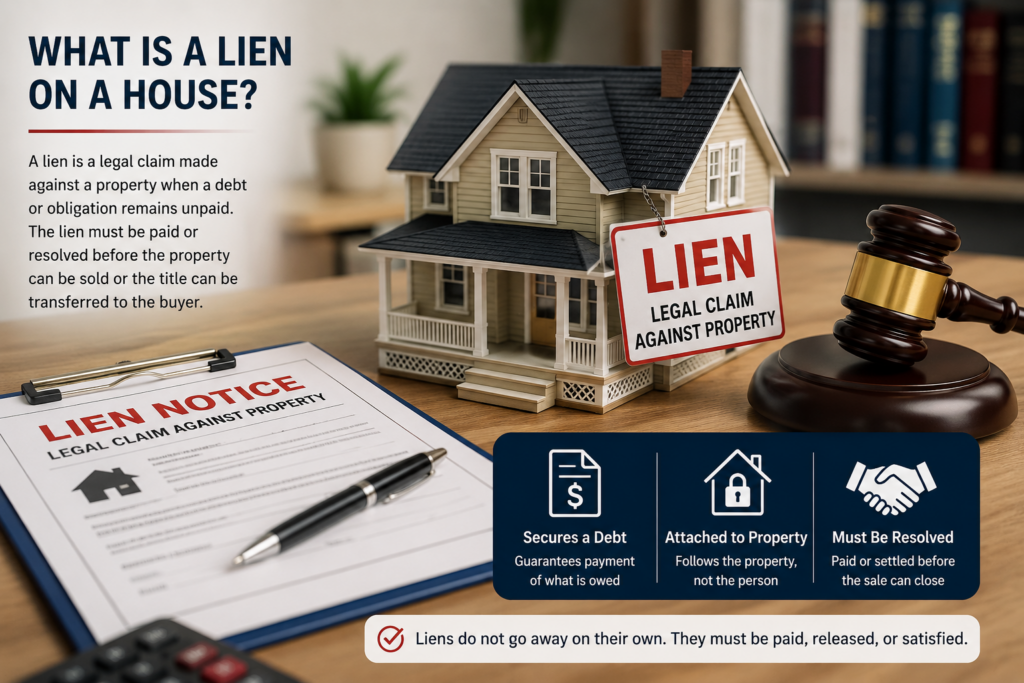
A lien is a legal claim against a property because someone is owed money. Depending on the type of lien and the amount owed, it can affect your ability to transfer clear ownership to a buyer.
The good news is that having a lien does not necessarily mean you cannot sell your home. In many situations, the lien can be paid or resolved from the proceeds of the sale.
Can You Sell a House With a Lien on It?
Yes, you can generally sell a house with a lien on it, but the lien typically needs to be resolved as part of the sale.
When you sell a property, the title company or closing attorney will usually search the property’s title for outstanding liens and other claims. If a lien is discovered, the parties need to determine how it will be handled before the buyer can receive clear title.
In a typical transaction, the amount needed to satisfy the lien may be paid from the seller’s proceeds at closing.
For example, suppose your home sells for $250,000 and you have a $15,000 lien against the property. If the lien can be paid from the sale proceeds, the amount owed may be deducted during closing, with the remaining proceeds going to you after other applicable costs and obligations.
However, every situation is different. Some liens can be more complicated to resolve than others.
What Is a Lien on a House?
A lien is a legal claim against a property that gives a creditor or another party an interest in the property until a debt or obligation is satisfied.
Liens can happen for several reasons. Common examples include:
- Unpaid property taxes
- Unpaid contractor or construction bills
- Court judgments
- Homeowners association debts
- Certain mortgage-related obligations
- Other unpaid debts secured against the property
The type of lien matters because the process for resolving it can vary.
Some liens may be relatively straightforward to pay off. Others may require additional documentation, negotiations, legal action, or assistance from a title professional.
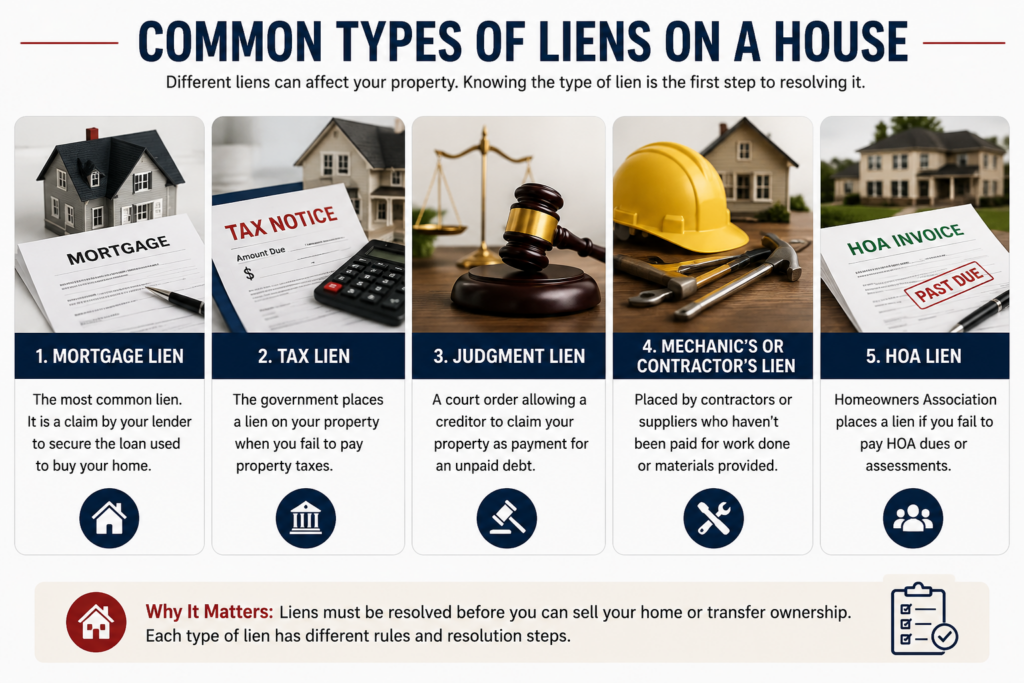
Common Types of Liens on a House
Before selling your home, it helps to understand what type of lien is attached to the property.
Mortgage Lien
A mortgage is commonly secured by a lien against your property. When you sell the home, the mortgage balance is normally paid from the sale proceeds as part of closing.
Having a mortgage lien does not usually prevent you from selling the house.
Tax Lien
A tax lien property may have a lien because of unpaid property taxes or other tax obligations.
Tax liens can be more complicated because unpaid taxes may need to be resolved before the property can transfer with clear title.
If you have unpaid property taxes, speak with the appropriate tax authority or a qualified professional to determine the amount owed and the steps required to release the lien.
Judgment Lien
A judgment lien may arise after a creditor obtains a court judgment against a property owner.
Depending on the circumstances and local laws, the lien may need to be paid or otherwise resolved before the property can be transferred with clear title.
Mechanic’s or Contractor’s Lien
If a contractor, subcontractor, or supplier claims they were not paid for work or materials, a construction-related lien may be placed on the property.
These liens can sometimes become complicated if there is a disagreement about the work or amount owed.
HOA Lien
Homeowners association dues, assessments, fines, or other unpaid obligations can sometimes result in a lien against a property.
The HOA or its collection representative can provide information about the balance and the requirements for resolving the lien.
How to Sell a House With a Lien
If you want to sell a house with a lien, the first step is to understand exactly what is attached to the property.
1. Find Out What Type of Lien You Have
Start by determining who placed the lien, why it was filed, and how much is currently owed.
If you are unsure whether your property has a lien, a title company, closing attorney, or other qualified professional can help you determine what appears in the property’s title records.
2. Determine the Amount Owed
The original debt may not be the current payoff amount.
Interest, penalties, legal fees, or other charges may have changed the balance. Ask the lienholder for an updated payoff amount and any requirements for releasing the lien.
3. Determine Your Home’s Potential Sale Price
You need to know whether the expected sale price is enough to cover your mortgage, lien balances, closing costs, and other obligations.
For example:
Estimated sale price: $300,000
Mortgage payoff: $220,000
Lien: $20,000
Other selling costs: $15,000
That would leave approximately $45,000 before any additional costs or obligations.
Understanding these numbers early can help you determine whether selling makes financial sense.
4. Talk With a Title Company or Closing Professional
A title professional can help identify liens and explain what needs to happen before closing.
The earlier you discover a lien, the more time you have to resolve potential problems.
5. Resolve the Lien
Depending on the circumstances, you may be able to:
- Pay the lien in full
- Negotiate a settlement
- Dispute an invalid lien
- Correct an improperly recorded lien
- Arrange for the lien to be paid from the sale proceeds
The appropriate option depends on the type of lien and your individual situation.
6. Complete the Sale
Once the title issues are resolved and the buyer’s requirements are satisfied, the transaction can move toward closing.
If the lien is being paid from the sale proceeds, the closing process typically accounts for that payment before the remaining proceeds are distributed to the seller.
Can I Sell My House With a Lien on It?
Yes, you may be able to sell your house with a lien on it.
The important question is whether the lien can be resolved as part of the transaction.
If the home has enough equity to pay the mortgage, lien, and selling expenses, selling may be relatively straightforward.
If you owe more than the property is worth, however, the situation can become more complicated. You may need to negotiate with creditors, contribute money toward the balance, or explore other options.
What Happens to a Lien When You Sell a House?
A lien generally does not simply disappear because the property is sold.
The lien normally needs to be satisfied, released, or otherwise addressed before the buyer can receive clear title.
In many standard sales, the lien is paid from the seller’s proceeds at closing. Once the required debt is satisfied and the appropriate release is recorded, the lien can be removed from the property’s title.
This is one reason a title search is an important part of a real estate transaction.
How to Remove a Lien on a House
If your goal is to remove a lien before selling, the process depends on the type of lien.
Generally, you may need to:
- Identify the lienholder.
- Confirm that the lien is valid.
- Request the current payoff amount.
- Pay or settle the debt if appropriate.
- Obtain documentation showing that the debt has been satisfied.
- Make sure the lien release is properly recorded.
If you believe the lien is inaccurate, expired, improperly filed, or already paid, speak with a qualified real estate attorney or title professional about your options.
Can You Sell a House With a Tax Lien?
A house with a tax lien may still be sellable, but tax liens can require special attention.
If property taxes are unpaid, the amount owed may need to be paid or otherwise resolved before the transaction can close with clear title.
In some situations, the unpaid taxes can be paid from the sale proceeds. In other situations, the tax authority may have specific requirements that must be satisfied first.
If you are dealing with a tax lien or tax delinquency, find out the exact amount owed and the applicable requirements before putting the property on the market.
What If You Owe More Than the House Is Worth?
This can be one of the biggest challenges when selling a property with a lien.
Suppose your home could sell for $200,000, but your mortgage and other liens total $215,000. After adding selling expenses, the gap could become even larger.
In this situation, a traditional sale may require you to bring money to closing or negotiate with the parties involved.
Depending on your circumstances, you may want to discuss options such as:
- Negotiating the lien balance
- Selling with creditor approval
- Bringing funds to closing
- Exploring a short sale if applicable
- Speaking with a real estate attorney or other qualified professional
- Getting an offer from a cash home buyer
The right solution depends on your debts, equity, the type of lien, and the rules that apply to your property.
Can a Cash Buyer Buy a House With a Lien?
A cash buyer may be able to purchase a property with a lien, but the lien still needs to be addressed.
A cash sale does not automatically eliminate a lien. The title will generally still need to be reviewed, and the lien may need to be paid or resolved as part of the transaction.
One potential advantage of working with an experienced cash home buyer is that they may be familiar with properties that have title issues, unpaid taxes, liens, or other complications.
If you are considering this option, ask the buyer exactly how they plan to handle the lien and what costs or obligations would remain your responsibility.
How Long Does It Take to Remove a Lien From a House?
The timeline depends on the type of lien, the lienholder, the amount owed, and how quickly the required paperwork is completed.
A straightforward paid lien may be resolved relatively quickly once the creditor provides the necessary release documents. A disputed lien or one involving legal proceedings can take considerably longer.
If you’re planning to sell, start addressing the lien as early as possible rather than waiting until you have a buyer.
Frequently Asked Questions
Can I sell my home with a lien on it?
Yes, in many cases you can sell a home with a lien. However, the lien generally needs to be paid, released, or otherwise resolved as part of the transaction.
Can you sell a house with a lien on it without paying the lien?
Usually, a lien cannot simply be ignored when selling a property. The closing process generally needs to address outstanding liens before the buyer can receive clear title.
Who pays the lien when a house is sold?
The seller is generally responsible for debts secured by their property, and a lien may be paid from the seller’s proceeds at closing. The exact process depends on the lien and the terms of the transaction.
Can I sell a house with a tax lien?
A property with a tax lien may still be sold, but the tax debt and the requirements of the relevant tax authority need to be addressed.
How do I get a lien off my house?
Typically, you need to satisfy the debt or resolve the underlying issue and obtain the appropriate lien-release documentation. If you believe the lien is invalid, seek advice from a qualified professional.
Can I sell my house fast with a lien?
It may be possible, but the lien can affect the closing process. A title search should identify the lien, and the parties involved will need to determine how it will be resolved.
Ready to Sell a House With a Lien? Know Your Options
Having a lien on your property can make selling a house more complicated, but it does not necessarily mean you cannot sell. Start by identifying the lien, confirming the amount owed, and understanding how it may affect your sale.
If you’re considering selling a house with a lien in the Carolinas, you can contact TurnPro Home Buyers to discuss your situation and learn more about your potential selling options. Understanding the lien, your home’s value, and the costs involved can help you make a more informed decision.