
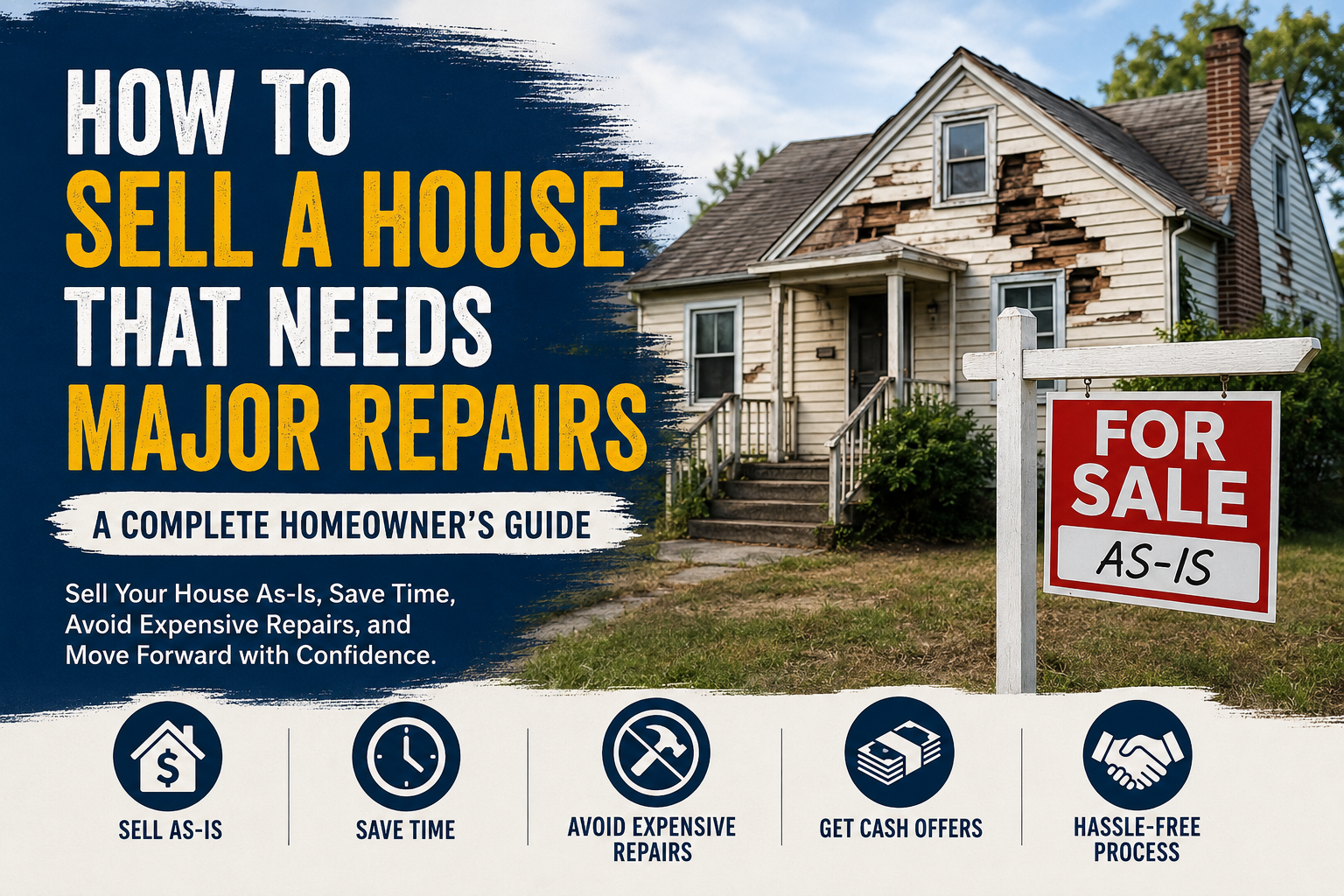
Selling a home is rarely easy, but it can feel even more challenging when your property needs significant repairs. Whether you’re dealing with an aging roof, outdated plumbing, electrical problems, or structural damage, you may wonder if buyers will still be interested in your home.
The good news is that learning how to sell a house that needs major repairs is easier than many homeowners think. You don’t always have to spend thousands of dollars fixing every issue before putting your property on the market. In many cases, you can sell your house in its current condition and still receive a fair offer.
Many people assume that a home must be completely renovated before it can sell, but that’s not true. There are buyers looking specifically for homes that need work, including real estate investors and cash home buyers. Understanding your options can help you avoid unnecessary expenses while making the selling process faster and less stressful.
In this guide, you’ll learn how to sell a house that needs repairs, when it makes sense to complete repairs, when selling as-is may be the better choice, and how to attract the right buyers for your property.
What Counts as Major Repairs When Selling a House?
Not every repair has the same impact on a home sale. Small cosmetic issues, such as chipped paint or worn carpet, usually won’t stop buyers from making an offer. However, major repairs can affect your home’s value, financing options, and the number of interested buyers.
Here are some of the most common major repairs homeowners face before selling.
Foundation Problems
Foundation issues are among the most serious problems a home can have. Cracks, uneven floors, sticking doors, or shifting walls can make buyers hesitant because repairs are often expensive. While some homeowners choose to fix these issues before listing, others decide to sell their home without making repairs.
Roof Damage
A leaking or aging roof can reduce buyer confidence. Missing shingles, water leaks, or storm damage may appear on a home inspection report and could delay a traditional sale.
Plumbing Issues
Major plumbing problems such as leaking pipes, broken sewer lines, or outdated plumbing systems can be costly to repair. Buyers often consider these expenses when deciding how much they’re willing to pay.
Electrical Problems
Older electrical panels, faulty wiring, or outdated systems may create safety concerns. Some lenders may even require repairs before approving a mortgage.
HVAC System Failure
Heating and cooling systems are expensive to replace. If your furnace or air conditioner is no longer working properly, buyers may factor replacement costs into their offers.
Water Damage and Mold
Water damage can lead to mold growth, damaged flooring, stained ceilings, and weakened structural materials. These issues should always be disclosed to potential buyers and may affect your property’s value.
Structural Damage
Problems involving load-bearing walls, support beams, or framing often require professional evaluation. Structural damage can make buyers cautious because repairs are typically complex and expensive.
The overall property condition plays an important role in determining your home’s market value. During the selling process, buyers may order a home inspection that identifies needed repairs. Understanding your home’s condition before listing it allows you to prepare for buyer questions and make informed decisions.
Can You Sell a House That Needs Major Repairs?
Yes. You can legally sell a house that needs major repairs, and many homeowners do exactly that every year.
One of the biggest misconceptions is that every problem must be fixed before selling. In reality, buyers purchase homes in many different conditions. While some buyers want a move-in-ready property, others actively look for homes that need repairs because they plan to renovate them.
If you’re selling a house that needs repairs, you generally have several options.
Sell the Home As-Is
Many homeowners choose to sell their property in its current condition. Selling as-is means you are not agreeing to complete repairs before closing. Buyers understand they are purchasing the property with its existing condition.
Although you may receive offers below the price of a fully updated home, selling as-is can help you avoid spending thousands of dollars on renovations.
Complete Selected Repairs
Some homeowners choose to repair only the most important issues before listing their property. Addressing safety concerns or fixing problems that could prevent financing may increase buyer interest without requiring a complete renovation.
Sell Directly to a Cash Buyer
Many cash home buyers specialize in purchasing homes that need repairs. Because these buyers typically purchase properties in their current condition, sellers often avoid repair costs, lengthy negotiations, and financing delays.
If you’re wondering how to sell my house that needs repairs, this option may be worth considering, especially if you need to sell quickly or don’t have the budget for major improvements.
Every situation is different. The best choice depends on your timeline, financial goals, and the overall condition of your home.
If you’re looking for a faster alternative to the traditional market, learn more about our Sell Your House Fast process and see how we help homeowners sell properties in any condition.
Should You Repair Your Home Before Selling?
One of the biggest questions homeowners ask is whether they should invest in repairs before putting their home on the market. The answer depends on your budget, timeline, and the condition of your property.
In some situations, making repairs can increase your home’s value and attract more buyers. However, major renovations don’t always provide a good return on investment. If you’re facing expensive repairs, selling your home in its current condition may be the smarter financial decision.
Here are a few factors to consider before making repairs.
Consider the Cost of Repairs
Major repairs can be expensive. Foundation work, roof replacement, plumbing upgrades, electrical repairs, and HVAC replacements can cost thousands—or even tens of thousands—of dollars.
Before investing your money, compare the estimated repair costs with the potential increase in your home’s selling price. Sometimes homeowners spend more on repairs than they recover at closing.
Think About Your Timeline
If you need to relocate, avoid foreclosure, settle an estate, or move after a divorce, waiting months to complete repairs may not be practical.
Selling your house as-is can often help you move forward more quickly without the delays that come with hiring contractors and completing renovations.
Understand Your Local Market
In a competitive housing market, buyers may be more willing to purchase homes that need work. In a slower market, however, buyers may expect updated properties and negotiate lower prices for homes needing repairs.
Knowing what buyers in your area are looking for can help you decide whether repairs are worth the investment.
When Selling As-Is Makes Sense
Selling an as-is home sale is often a good option if:
- You don’t have the money to complete repairs.
- The repairs are extensive.
- You need to sell quickly.
- The home has been inherited.
- The property has been vacant for a long time.
- You want to avoid the stress of managing contractors.
Many homeowners discover that selling as-is is the simplest way to move on without investing additional time or money.
How to Sell a House That Needs Major Repairs
If you’re wondering how to sell a house that needs major repairs, following a clear plan can make the process much easier. Here are the key steps to help you prepare your home and attract serious buyers.
Step 1: Evaluate Your Home’s Condition
Start by taking an honest look at your property’s overall condition.
Walk through every room and make a list of known issues, such as:
- Roof leaks
- Plumbing problems
- Electrical issues
- Foundation cracks
- HVAC problems
- Water damage
- Mold
- Structural concerns
Understanding your home’s property condition allows you to price the home realistically and answer buyer questions with confidence.
If necessary, consider hiring a professional to prepare a property condition report so you have a clear understanding of the repairs your home may need.
Step 2: Decide Whether to Repair or Sell As-Is
After evaluating your home, decide which option makes the most financial sense.
Ask yourself:
- Can I afford major repairs?
- Will the repairs significantly increase my home’s value?
- Do I have enough time to complete renovations?
- Am I comfortable managing contractors?
If the answer to several of these questions is “no,” selling your home in its current condition may be the better option.
Many homeowners successfully sell a house without repairs, especially when working with experienced buyers who purchase homes in any condition.
Step 3: Set a Realistic Asking Price
Pricing is one of the most important parts of selling a home that needs repairs.
Overpricing your property may cause it to sit on the market for months. Buyers today compare listings carefully and often know the estimated cost of common repairs.
Instead, consider:
- The home’s current condition.
- Comparable homes in your area.
- Estimated repair costs.
- Current market demand.
A realistic asking price can attract more qualified buyers and lead to faster offers.
Step 4: Gather Repair Estimates
Even if you don’t plan to complete repairs, getting a few professional estimates can be helpful.
Providing buyers with repair estimates shows transparency and gives them a better understanding of what the work may cost. This often builds trust during negotiations.
Step 5: Be Honest About Known Problems
Honesty is essential when selling any home.
Most states require sellers to disclose known material defects that could affect the property’s value or safety. Completing the required property condition disclosure statement accurately helps protect both the buyer and the seller.
Trying to hide known issues can lead to disputes after closing and may create legal complications.
If you’re deciding whether to repair your home or sell it as-is, Rocket Mortgage offers a helpful guide that explains what homeowners should consider before listing a property and how repairs can affect the selling process.
Step 6: Market the Home to the Right Buyers
Not every buyer is looking for a fully renovated home.
Many people specifically search for:
- selling a fixer upper
- selling a house in poor condition
- investment opportunities
- renovation projects
- rental properties
Others simply want an affordable home and are willing to complete repairs themselves.
Highlight the property’s strengths, such as:
- Location
- Lot size
- School district
- Layout
- Investment potential
- Future value after renovations
Being honest while focusing on your home’s positive features helps attract serious buyers who understand the property’s condition.
Step 7: Consider Selling to a Cash Home Buyer
If your home requires expensive repairs and you want to avoid the traditional selling process, selling directly to a cash buyer may be a practical solution.
Many cash buyers purchase homes exactly as they are, meaning you typically won’t need to:
- Make repairs
- Renovate the property
- Clean extensively
- Pay real estate commissions
- Wait for mortgage approval
For homeowners dealing with costly repairs or tight timelines, this option can provide a faster and more convenient selling experience.
If you’re exploring your options, take a look at our How It Works page to learn how our simple cash home buying process works from start to finish.
Selling a Fixer Upper: What Homeowners Need to Know
Many people assume that a fixer-upper is impossible to sell, but that’s far from the truth. In fact, there are buyers who actively look for homes that need repairs because they see the opportunity to renovate and increase the property’s value.
If you’re selling a fixer upper or selling a fixer upper house, the key is understanding your target audience. Instead of trying to appeal to every buyer, focus on those who are comfortable purchasing homes that need work.
A fixer-upper may still have many attractive features, including:
- A desirable location
- A spacious floor plan
- A large lot
- Strong investment potential
- A good neighborhood
- Easy access to schools, shopping, or major roads
Highlighting these strengths can help buyers see the property’s potential beyond its current condition.
Price Your Home Realistically
One of the biggest mistakes homeowners make is pricing a fixer-upper as though it has already been renovated.
Buyers will usually compare your home with similar properties in the area and estimate the cost of repairs. Setting a realistic asking price based on your home’s current condition can generate more interest and increase the chances of receiving serious offers.
Be Transparent About Repairs
Honesty builds trust with buyers.
If your home has known issues, clearly disclose them and provide any available repair estimates or inspection reports. Buyers appreciate transparency and are often more comfortable making an offer when they understand exactly what they’re purchasing.
Whether you’re learning how to sell a fixer upper or how to sell a fixer upper house fast, being upfront about the home’s condition can make the selling process smoother.
Selling a House in Poor Condition
Many homeowners worry that no one will want to buy their property because it’s outdated or has significant damage. Fortunately, that’s not always the case.
Selling a house in poor condition is common, especially when the home has good bones or is located in a desirable neighborhood.
A house may be considered in poor condition if it has:
- An aging roof
- Outdated kitchens or bathrooms
- Damaged flooring
- Water stains
- Broken windows
- Electrical or plumbing problems
- Structural damage
- Deferred maintenance
While these issues may reduce your home’s market value, they don’t necessarily prevent it from selling.
Focus on What You Can Control
Even if you’re not making major repairs, small improvements can help create a better first impression.
Consider:
- Removing clutter
- Cleaning the home thoroughly
- Mowing the lawn
- Trimming bushes
- Removing trash or unwanted items
- Opening curtains to let in natural light
Simple cleaning and basic maintenance can make your property more appealing without requiring a large investment.
Market the Home Honestly
If you’re selling a house in poor condition, avoid trying to hide its flaws.
Instead, describe the property accurately while emphasizing its strengths. Buyers appreciate honest listings and are more likely to trust sellers who are transparent about the home’s condition.
What Is a Distressed Property?
You may have heard the term distressed property but aren’t sure what it means.
A distressed property is a home experiencing financial or physical challenges that may make it more difficult to sell through the traditional real estate market.
Common examples include:
- Homes needing major repairs
- Vacant properties
- Inherited homes
- Properties facing foreclosure
- Fire- or storm-damaged homes
- Homes with significant deferred maintenance
In simple terms, the distressed property meaning refers to a property that requires extra attention because of its condition or the owner’s financial situation.
However, owning a distressed property doesn’t mean you can’t sell it. Many buyers, including investors and cash home buyers, specifically look for these opportunities.
Selling a Distressed Property
If you’re selling a distressed property, your options generally include:
- Listing with a real estate agent
- Selling the property as-is
- Completing repairs before listing
- Selling directly to a cash home buyer
The right choice depends on your budget, timeline, and goals. If completing repairs isn’t practical, selling as-is may save both time and money.
Why Many Homeowners Choose Cash Home Buyers
When a home requires major repairs, traditional buyers may struggle to secure financing or request extensive repairs before closing.
This is one reason many homeowners choose to work with cash home buyers.
Selling directly to a cash buyer can offer several advantages:
- No major repairs or renovations required
- No real estate commissions
- No lengthy negotiations over repair requests
- Faster closing timelines
- Fewer financing-related delays
- Simple and straightforward selling process
For homeowners dealing with costly repairs, inherited properties, financial hardship, or an urgent move, selling directly to a cash buyer can remove many of the obstacles associated with a traditional sale.
Every homeowner’s situation is different, so it’s worth comparing all of your options before making a decision.
If you’d like to learn more about what it’s like to work with our team, read our Reviews page to see what other homeowners have shared about their experience selling their homes to TurnPro.
Common Mistakes to Avoid When Selling a House That Needs Major Repairs
Selling a home that needs repairs can be challenging, but avoiding a few common mistakes can help you save time, reduce stress, and attract serious buyers.
Overpricing the Property
Every homeowner wants the best possible price, but pricing a home too high can discourage buyers and cause the property to sit on the market.
Be realistic about your home’s condition and compare it with similar properties in your area. A fair asking price often generates more interest and may even lead to multiple offers.
Spending Too Much on Repairs
Not every repair will increase your home’s value enough to recover the cost.
Before investing thousands of dollars in renovations, consider whether selling your home as-is may be the more practical option. In many cases, buyers are willing to purchase homes that need work, especially if the price reflects the property’s condition.
Hiding Known Problems
Trying to cover up major issues can create problems later in the selling process.
Be honest about any known defects and complete any required disclosures. Transparency builds trust with buyers and helps reduce the risk of disputes after closing.
Ignoring Curb Appeal
You don’t need a complete renovation to make a good first impression.
Simple improvements such as mowing the lawn, trimming bushes, pressure washing the driveway, or cleaning the home’s exterior can make your property look more inviting without spending a lot of money.
Accepting the First Offer Without Comparing Options
Receiving an offer quickly can be exciting, but it’s still important to review your options carefully.
Compare offers based on more than just the purchase price. Consider factors such as closing timeline, financing, repair requests, and overall convenience before making your decision.
Frequently Asked Questions
Can I sell a house that needs major repairs?
Yes. You can sell a house that needs major repairs through a real estate agent or directly to a cash home buyer. Many buyers purchase homes in their current condition, allowing homeowners to avoid costly renovations.
Should I repair my house before selling it?
It depends on your budget, timeline, and the expected return on investment. If repairs are expensive or you need to sell quickly, selling the property as-is may be the better option.
Can I sell my house without making repairs?
Yes. Many homeowners successfully sell their homes without making repairs. Selling as-is is often a practical solution for properties that require significant work.
Will major repairs reduce my home’s value?
Major repairs can affect your home’s market value because buyers often consider the cost of completing the work. Pricing the property appropriately can help attract serious buyers despite its condition.
Who buys houses that need major repairs?
Cash home buyers, real estate investors, and some individual buyers frequently purchase homes that need repairs. These buyers are often prepared to renovate the property after closing.
Final Thoughts
Selling a home that needs major repairs may seem overwhelming, but you have more options than you might think. Whether your property has structural issues, outdated systems, or years of deferred maintenance, you don’t always have to invest in expensive renovations before selling.
By understanding your home’s condition, pricing it fairly, and choosing the right selling strategy, you can move forward with confidence. For many homeowners, selling the property as-is is the fastest and most cost-effective solution, especially when time and repair costs are major concerns.
If you’re looking for a simple way to sell your house without the hassle of repairs, TurnPro Buy Houses is here to help. We purchase homes in a wide range of conditions and provide fair, no-obligation cash offers, allowing you to sell on your timeline without the stress of traditional home sales.
Ready to explore your options? Contact our team today to request a free, no-obligation cash offer and learn how easy it can be to sell your house, no matter its condition.